Category Archives: Series

From Lazy to Self-Disciplined – Part 1

Once again in this month’s Mom’s Corner, I would like to use some questions that came in via e-mail as a springboard. Here is what this mom is struggling with:

I was wondering if you had any advice (or possibly you could address this in a Mom’s Corner) on how someone can improve her work ethic. I am terribly embarrassed to admit this, but I really feel like at times I can be lazy. I know there are things that need to be done, but I just don’t feel like doing them! I realize that this is a sinful attitude, and I want to change. Do other moms struggle with this? Would you have any tips on how I can improve or Bible verses that could encourage me in this area? Self-discipline is a character quality I would very much like to see flourish in my life, and I would like to pass it on to my children!

One thing I can tell you is that you are most certainly not alone and that many, if not most, moms struggle with laziness to some degree or another. I expect it is part of the sin nature of flesh that we have all inherited from Adam. “For the flesh lusteth against the Spirit, and the Spirit against the flesh: and these are contrary the one to the other: so that ye cannot do the things that ye would” (Galatians 5:17).

Let’s begin by discerning if self-discipline is important and something for which we would want to strive. We don’t find the word self-disciplined in the Bible so we have to determine its value based on other criteria. Would the Lord have us to be self-disciplined, or would it be legalistic to feel like we need to be busy and productive with our time? We often hear the word legalism used against those who desire to follow the Lord Jesus in a spiritual walk of obedience. Let’s look at this verse. “For, brethren, ye have been called unto liberty; only use not liberty for an occasion to the flesh, but by love serve one another” (Galatians 5:13). Our liberty is freedom from the bondage of sin, and we are not to use it to serve ourselves but rather to serve others. If we are going to be servants in our homes, to those we love, and to those we come in contact with, it will take time and discipline.

“But the fruit of the Spirit is love, joy, peace, longsuffering, gentleness, goodness, faith, Meekness, temperance: against such there is no law” (Galatians 5:22-23). Here we have “temperance” as a fruit of the Spirit. Strong’s Concordance defines temperance as “self-control—the virtue of one who masters his desires and passions.” When we master our desires and passions, then we will be focusing our energy on the tasks the Lord Jesus has called us to do.

“And he said to them all, If any man will come after me, let him deny himself, and take up his cross daily, and follow me” (Luke 9:23). In order to set aside laziness, which involves self-indulgence, we have to deny ourselves. We will choose against what we might in our flesh choose to do with our time and rather decide to obediently accomplish what the Lord has set in front of us.

“. . . for my heart rejoiced in all my labour: and this was my portion of all my labour” (Ecclesiastes 2:10). The Lord wants us to have joy in the fruit of our hands rather than dread or avoid it. The work He sets before us is a blessing not a curse.

Scripture shows us that working, the opposite of being lazy, is positive. “Six days shalt thou labour, and do all thy work” (Exodus 20:9). For six days of the week, the Lord expects us to be diligently working, and on the seventh day, we get to worship and rest.

“The labour of the righteous tendeth to life: the fruit of the wicked to sin” (Proverbs 10:16). Our work, the fruit of self-discipline, leads to life. It allows us to complete what the Lord wants us to do, and it brings a sense of joy, peace, and contentment along with it. Sometimes we think that doing what we want to do leads to life but there is truth in this verse that it more often leads to sin.

Here is an interesting verse: “In all labour there is profit: but the talk of the lips tendeth only to penury” (Proverbs 14:23). Do you know what penury means? According to the Merriam Webster dictionary, it is extreme poverty. In our situation of desiring self-discipline to help us accomplish our tasks of mothering and homemaking, we aren’t talking about profit and poverty. However, we can easily discern from this verse that working is beneficial while “talk of the lips,” which could be equated with laziness, is harmful.

Our labor would be the choice to set ourselves to the tasks that allow us to love and care for our husbands, our children, and our homes. I think the “talk of the lips” would equate to time wasters such as sitting doing nothing, reading novels, Internet browsing and blog hopping, frivolous shopping, or large amounts of time on the phone. There is nothing wrong with these activities in and of themselves, but when we do them rather than the tasks the Lord Jesus has called us to do, then we have a problem and are entering into the realm of laziness rather than self-discipline.

“The soul of the sluggard desireth, and hath nothing: but the soul of the diligent shall be made fat” (Proverbs 13:4). I think sluggard would be a good word to apply to us when we allow laziness to creep into our lives and rule them. In this verse, we see that the sluggard wants the good things that come from working and self-discipline, just like we moms want the fruit that would come in our lives and home from these positive characteristics. However, it is not the sluggard who reaches that goal, but rather it is the diligent—the mom who is self-disciplined.

This section of Scripture provides us with a great analogy for self-discipline. “Go to the ant, thou sluggard; consider her ways, and be wise: Which having no guide, overseer, or ruler, Provideth her meat in the summer, and gathereth her food in the harvest. How long wilt thou sleep, O sluggard? when wilt thou arise out of thy sleep? Yet a little sleep, a little slumber, a little folding of the hands to sleep: So shall thy poverty come as one that travelleth, and thy want as an armed man” (Proverbs 6:6-11).

The ant works hard even though there is no one watching him, holding him accountable, or telling him what to do and when to do it. For the sluggard, the ant is set out as an example from which he should learn and one he should follow. If he will learn from the ant, he will become wise. In studying the phrase “a little folding of the hands to sleep” in the Hebrew that section doesn’t mean physical sleep but rather just resting. Resting could certainly be one root of our laziness, if it becomes the habit of our lives, because usually we are avoiding work that we need to do and are choosing to do something that we consider more restful, whether it is less physically taxing or less emotional taxing. Again, please don’t misunderstand me. It is okay to rest by doing things like sitting and talking to your family, rocking on the back deck while you look at the garden, closing your eyes for an afternoon nap if you are tired. However, when our lifestyle and focus becomes that of resting and avoiding what needs to be done, that is when we have a problem.

As we begin this series that is examining a move from laziness to self-discipline, the biblical view of those two characteristics is essential. We don’t have to look far to see that the Bible directs us away from laziness that indulges the flesh and toward self-discipline that denies the flesh. Perhaps as you are in the Word this month, you will discover more Scripture that reinforces self-discipline. Next month we will move into the practical aspects of developing self-discipline.
A Godly Legacy – Part 2

In the family of Andrew Murray, of South Africa, eleven children grew to adult life. Five of the sons became ministers and four of the daughters became ministers’ wives. The next generation had a still more striking record in that ten grandsons became ministers and thirteen became missionaries. The secret of this unusual contribution to the Christian ministry was the Christian home.” John Mott in his biography of Andrew Murray reminds us of the power of a father’s legacy.

Last month we began the topic of a father’s godly legacy. How critical is it to us that we leave behind children who love and serve the Lord Jesus Christ? You can tell how important something is to a man by the decisions that he makes. A man will find a way to do what is important to him. No matter how difficult it is, he will do what he considers must be done.

God has called the dad to provide for his family. “But if any provide not for his own, and specially for those of his own house, he hath denied the faith, and is worse than an infidel” (1 Timothy 5:8). Most men are responsible when it comes to providing for their families. Often there are mornings they are tired and would like to sleep in, yet they get up and go to work. There can be a host of days where there are other things they would rather do; yet they make the right choice and go to work.

Funny, how sometimes others know us better than we know ourselves. They know that we do what is most important to us by observing the decisions we make and the actions we take. We may think something is important to us, but if we aren’t making appropriate decisions and allocating time to accomplish it, we need to face the fact that it really isn’t important to us.

Assuming raising sons and daughters to be mighty in the Lord Jesus is vital for each dad reading this, how might one go about this? Paul tells us the basic “components” of a person. “And the very God of peace sanctify you wholly; and I pray God your whole spirit and soul and body be preserved blameless unto the coming of our Lord Jesus Christ” (1 Thessalonians 5:23). We see from this verse that a person consists of a body, soul, and spirit. So how might we establish a proper foundation of each area?

First let’s consider how we could prepare our children physically. A body is important because it houses the soul and spirit. If the physical house we live in is in poor repair, we are less effective in life. When the storms come, a leaky roof diverts our attention away from what we could be doing. If the furnace is faulty, we will have to take emergency measures during cold winter storms, and poor drainage may cause our basement to flood. For us to invest time in priorities, our homes must be maintained in good repair.

In a similar way, our health impacts greatly how well we can serve the Lord. If we have no energy or are sickly, we won’t have the stamina to give the Lord full days. Then when we come home from work each evening, we will be too tired to lead family Bible time. As a matter of fact, many dads come home for work and choose to vegetate through the evening.

Proper nutrition and exercise may well mean the difference between suffering lifestyle-related diseases with onerous medical expenses that could be avoided or leading an active productive life. What we feed our children and how their bodies are strengthened will greatly determine how well their bodies will function during their lifetime, and it will set appetites that will help or hinder them throughout their lives.

During the last twenty years, obesity percentages have continued to climb to the point that it is being called a national epidemic by the Centers for Disease Control with roughly one third of all adults being classified as obese. “Be not deceived; God is not mocked: for whatsoever a man soweth, that shall he also reap. For he that soweth to his flesh shall of the flesh reap corruption; but he that soweth to the Spirit shall of the Spirit reap life everlasting” (Galatians 6:7-8).

Americans are sowing to the flesh so effectively that obesity statistics keep rising at alarming rates. Being overweight leads to serious and costly health problems such as diabetes, heart disease, high blood pressure, and sleep apnea. Next time you are at the doctor’s office take an informal poll and count how many in the waiting room are overweight versus how many are trim. Every time I’ve done that the results have been consistently shocking.

We have heard some say how manageable diabetes is today, but I don’t believe it. I have personally observed the “fruit” of diabetes in the elderly at our nursing home church. Toes and portions of a foot are cut off in the attempt to stop infection from spreading. Legs are removed up to the knee before the infection is finally stopped. Kidneys fail, and eyesight is lost all due to diabetes.

The best way to deal with diabetes is to prevent it in the first place. A proper diet and exercise are necessary. Parents modeling a healthy lifestyle and then teaching their children the same will ensure that sons and daughters have bodies capable of serving the Lord.

When you observe an overweight parent, notice how common it is see overweight children in the family. I know I have not been a good example of weight control and a balanced diet for my children. However, over the last five years it has been a focus of mine to become a good example and great positive strides have been made in nutrition for our family. If only the bad food didn’t taste so good it would be much easier. But isn’t that true for sin as well? Sin is pleasurable, and therefore must be resisted. Overeating unhealthy food is also pleasurable, and for our health it is good to resist.

Nutrition goes hand-in-hand with exercise, and we can observe from 1 Timothy 4:8 that the physical emphasis is somewhat beneficial when compared with godliness. “For bodily exercise profiteth little: but godliness is profitable unto all things, having promise of the life that now is, and of that which is to come.” Unfortunately, all too often parents think of competitive sports as the answer to a need for exercise. Yet, we have regularly talked to people who mention injuries they have received due to childhood sports’ team activity. Exercise at home together as a family is a much safer way to receive exercise without the heightened risk of injury due to competitive sports. Also, when exercising at home with the family, the child doesn’t have the negative influences of other teammates nor develop the appetite to waste hours and hours watching the sport on TV.

Simple exercises at home are possible and effective. If Dad will work out with the children, there is the added benefit of time well spent together building relationships. As an experiment this winter, we had a three-month fitness challenge on Titus2.com for families. Many who participated commented to us how they greatly enjoyed and benefited from their time invested working out together. Simple habits learned as children will bring lifelong benefits to health. However, it does take effort to begin and maintain exercise programs. If you would be interested in a few introductory exercises that you can do at home as a family, you can go to: February challenge.

I ended up suspending my normal, daily exercise during the last trip. I really didn’t miss the hard work and the time it takes. However, I did miss the benefits of exercise. When I don’t exercise, I feel lethargic and have greater difficulty maintaining my weight. I’ve found it to be one of those necessary aspects of life that has to be a priority for it to happen. Then once it is over, I’m satisfied that I did it and glad to get on with the rest of the day.

Our influence is powerful in the lives of our children. We are sowing appetites in their lives by our example. Medical costs are going to spiral upward through the years, and the healthier a person is, the less he will spend and the higher the quality of his life. A fit person will have more energy with which to minister to his family and serve the Lord. May we teach our children how to maintain their bodies for the glory of the Lord. “All things are lawful unto me, but all things are not expedient: all things are lawful for me, but I will not be brought under the power of any” (1 Corinthians 6:12). Next month we will continue this series.

Holly Homemaker – Part 5

The Holly Homemaker series has managed to draw itself out to encompass quite a few articles.

It started from a blog post on Titus2.com and a negative comment about that post. By now you are probably very familiar with the blog post and comment, but in case we have a new reader or you want to refresh you memory, here it is one more time.

5 Year Old’s Enthusiasm

chorepack

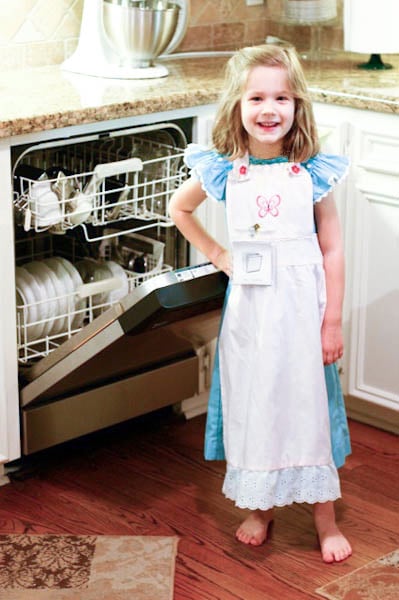
From a recent e-mail: “I wanted to send this sweet picture of our oldest, Audrey, wearing herChorePack the first week and getting ready to unload the dishwasher. She RAVED about how she loved the chore pack because it reminded her of everything she needed to do in the morning instead of her forgetting things that needed to get done. We’ve loved the system so far! Thank you for creating it.”

“Seest thou a man diligent in his business? he shall stand before kings; he shall not stand before mean men” (Proverbs 22:29).

Now, for the comment:

“That poor little girl. She’s happy because she’s pleasing mommy—like all children do. She should be out playing with friends, playing dress up or let’s pretend, MAYBE a few small chores here and there—but CHOREPACKS? You people are going to kill that child’s spirit before she’s 7. God forbid she wants to be anything other than Holly Homemaker—do they have ChorePacks for future lawyers? Or Astronauts? I hope that she grows up to realize that she’s worth more than just an unpaid scullery maid/nanny.”

From the blog comment, we are left with the feeling that the author believes that if a child is given more than a few small chores to do, he will not have any playtime. This is really far from the truth. After the first Holly Homemaker Mom’s Corner, the mom who had originally sent us the photo of her five-year-old daughter with her ChorePack unloading the dishwasher wrote to us. She was a little taken aback at the assumptions that were made in the blog comment concerning her daughter’s activities. This is what she said.

“I was so sad to hear about the woman who commented negatively and was thrilled to see your response. The sad thing is that the commenter does not even know the full story. We also use your scheduling system, and there is plenty of time scheduled for my daughter to play dress up, babies, play with her sister and brother, do school, and crafts, etc. I think this woman has no idea what your ChorePack system is about and the time actually involved in them. My daughter DOES want to be a mommy when she grows up and like you, I think it honors the Lord for her to do so.

“As far as how much time the chores take, my daughter is five so she is responsible for eight things in the morning: praying (she can’t read yet), getting dressed, putting PJ’s away, making her bed, brushing her hair, filling the cat’s water bowl, unloading the top rack of the dishwasher, and brushing her teeth. ALL of this takes her less than 20 minutes in the morning; sometimes she even gets her little sister dressed in that same amount of time.

“We also have an afternoon ChorePack where she waters our two houseplants, makes sure her room is picked up, puts books and toys away, sets the table, and is the kitchen helper if it is her day (she trades off with her brother). I would say this one takes her a maximum of thirty minutes because she usually helps me train our almost two-year-old in picking up her toys as well. So chores ALL DAY take less than an hour which leaves eleven hours for fun and school since the children are up from 7 a.m. to 7 p.m.

“I didn’t even know how to turn on the washing machine when I went to COLLEGE. I had to have my mom come up and show me how to run it when she was visiting the first week. How sad! You would think my mom would be anti-chores since she did everything for us, but she loves the idea that we are training our children on how to keep up with themselves and be responsible, God-fearing adults.” The five-year-old’s mom

The precious, little ChorePack-using girl’s mom gives us a good perspective of what her daughter’s day looks like and how much of it she is spending doing chore work. The jobs are reasonable to her age and capability. Her mommy is helping her invest her time in productive activities like chores and school while allowing plenty of time for play.

To be honest with you, I wonder if the children who will grow up to be lawyers and astronauts aren’t quite possibly the ones who are learning to work at home rather than the ones who are addicted to TV, movies, and Xboxes.

I remember a conversation we had with one of our neighbors who drives a public school bus. She told us that she asked the children on her bus how many of them played outside. Only two raised their hands. She decided to give them a “play-outside challenge.” We had recently had a seven-inch snow, and there was still a lot of snow on the ground. She told her bus children that when she came to pick them up in the morning, she would give a reward to any child who had built a snowman by the bus stop. There was only one child who responded to the challenge of building a snowman that was visible on the route the next day. That child was treated to a McDonald’s Happy Meal.

When children are given chores to do, they are learning to apply themselves to a task that needs to be accomplished. They have something productive to do with a portion of their time. With practice at their chores, they become responsible, diligent, thorough, careful, and efficient. They also learn how to manage their time. All of those are qualities that a professional will need just as much as the Holly Homemaker needs them. The children who learn how to work at home will have the perseverance and determination to apply themselves to difficult tasks they will face in adulthood–whether that is starting a business, becoming an astronaut or lawyer, or raising a family.

Sadly, the children who grow up without being encouraged to work will likely choose to avoid work in their adult lives. They will perpetuate their childhood into their adult years and wonder why they struggle so much. Remember from the March 2011 Holly Homemaker Mom’s Corner where the professional couldn’t find young employees because none of those who applied for the jobs knew how to work?

Those who haven’t learned how to work will not be qualified to be the leaders of their generation because they have set their hearts and affections on fun and games rather than industry and service. Chores and working don’t kill a child’s spirit, instead they develop, enhance, challenge, and produce the kind of spirit that will make that child successful as an adult. It is the children who are left to sit in front of the TV with their XBoxes whose spirits are being killed. Those spirits are being sucked into the mire of self, mindlessness, and entertainment. Could it be that these children are developing the appetites that will make them be “lovers of pleasures more than lovers of God (2 Timothy 3:4)?”

Here is one more comment that I wanted to include in this series:

“When we learn to work together and when the children work before they go play, we are all happier plus Mom might be freed up enough to play with them.” Mom O

I agree with Mom O that as the children pitch in to help in their homes, Mom’s workload is lightened. This allows her not only her more time to play with her children, talk to them, and read to them, but it also helps facilitate a more joyful, content overall attitude. A happy mom is often the foundation of a happy family.

In the past, Steve and I listened to those, like the negative blog commenter, who would want us to choose not to give our children chores but rather simply let them play and have fun. We also evaluated the results of that kind of parenting, and we didn’t like the results. We saw appetites developed for self and entertainment but we desired our children to have appetites to serve. Working helped our children toward the servant’s heart found in Scripture. “For, brethren, ye have been called unto liberty; only use not liberty for an occasion to the flesh, but by love serve one another” (Galatians 5:13).

Others, as they have shared through this series of articles, have seen the bad results of children not learning how to work, as well. This was usually from personal experience in the area of not having been given chores as they were growing up.

When we did a survey of Christian families before writing Managers of Their Chores, overwhelmingly we heard back that these families wanted to teach their children how to work. About 75% of the respondents came from families where they were not required to do household chores, and they felt that decision by their parents had hindered them as adults. They didn’t have the skills they needed or the attitudes toward work that they wanted. They simply weren’t equipped for what they would face as adults. These families are making different decisions for their children, decisions that include a positive attitude toward chores and teaching their children to handle chore responsibility.

I think in this series we have now covered each of the concerns the negative blog commenter had about a five-year-old having a ChorePack to help her do some household chores. I am happy that I can be a Holly Homemaker and that one of the things I can do being home with my children is to teach them how to work. We want our children equipped for their adulthood through the skills they are learning when they work in our home plus the work ethic that comes with chores as well. May we be women who look beyond the cries of the world that says a child’s days should only consist of fun and choose to prepare our children for life.

Holly Homemaker – Part 4

This month we delve once again into a comment that was left on our blog in response to a blog post. We didn’t approve the comment on the blog, but we saved it so that we could address the concerns that it was raising. If you’d like to read the previous articles in this series, please do so. Here is the blog post and the comment that is the basis for this series of articles.

5 Year Old’s Enthusiasm

chorepack

From a recent e-mail: “I wanted to send this sweet picture of our oldest, Audrey, wearing her ChorePack the first week and getting ready to unload the dishwasher. She RAVED about how she loved the chore pack because it reminded her of everything she needed to do in the morning instead of her forgetting things that needed to get done. We’ve loved the system so far! Thank you for creating it.”

“Seest thou a man diligent in his business? he shall stand before kings; he shall not stand before mean men” (Proverbs 22:29).

Now, for the comment:

“That poor little girl. She’s happy because she’s pleasing mommy—like all children do. She should be out playing with friends, playing dress up or let’s pretend, MAYBE a few small chores here and there—but CHOREPACKS? You people are going to kill that child’s spirit before she’s 7. God forbid she wants to be anything other than Holly Homemaker—do they have ChorePacks for future lawyers? Or Astronauts? I hope that she grows up to realize that she’s worth more than just an unpaid scullery maid/nanny.”

I have addressed the benefits that I have found in my life of being a Holly Homemaker and how we would like our daughters to choose to be Holly Homemakers when they are married. Last month we started evaluating the part of the comment where the author indicates that she/he doesn’t think a child should have more than a “few small chores here and there.” Obviously a five-year-old unloading a dishwasher is beyond the chore criteria that the blog commenter would feel is reasonable. In the previous article, we observed that in real adult life everyone will have daily, household responsibilities. Learning to do chores as children simply prepares our children to handle those tasks as adults and to have positive attitudes toward them.

One mom wrote to me and listed the chores her children are doing and why it is critical to her that her children learn to work. Here is what she said.

“Today, my four-year-old washed the breakfast dishes and loved it. My six-year-old also does dishes, some sweeping, and setting/clearing the table. Between them my ten and nine-year-old sons sweep the kitchen, keep the house vacuumed (except for the master bedroom and basement), do the garbage and recycling duties, clean the garage, do other yard work as asked, clean the bathroom sinks and toilets daily, take care of the dinner dishes most nights, and sometimes cook a simple meal here and there.

“Recently a neighbor asked if the two older ones would be interested in helping her clean the stables of her little horse farm. She’s getting older and is unmarried. They were very enthusiastic even when they had no expectation of reward. I doubt that if it weren’t for the chores they have to do at home that they would be very eager to perform what they know will be reasonably demanding labor. “Our ‘chore life’ is not perfect, but it’s a long way from what I grew up with. I can remember moaning and fretting about small tasks until my mom gave up, and in the end, I don’t think I had any household responsibilities by the time I finished high school!!

“Anyway—all this to say: CHORES ROCK!” Mom I

When I e-mailed to ask permission to use Mom I’s testimony about chores from her childhood and chores for her children, she sent me a bit more of the story. This is what she said.

“After I emailed, I was thinking also about how my mom said when I was in my early teens that I should make a meal once a week. I just sort of ignored that, and nothing happened. Some time later my mom suggested maybe I should make a meal once a month. I didn’t pursue that either and eventually the whole matter was dropped. At the time I was thrilled. So of course when I eventually needed to make meals, I was quite lost, and still had the sense that this was ‘not my job.’ Perhaps that’s some good coming out of the fact that my mom didn’t persevere in having me do chores—it made me realize that it’s important to me that my children learn how to work! :)” Mom I

From Mom I, we have the perspective of growing up in a home where the children were given no chore responsibility. However, coming to her adult years and motherhood role, Mom I was not prepared. From this experience, she is choosing to raise her children in a different manner by teaching them how to work at home. From that decision, she is already experiencing children who can contribute a substantial amount of help to the household chores, and they are also being sought after for their diligence and skills by others even though the children are only nine and ten. In addition, these nine and ten-year-olds are excited about working to help the neighbor even though they aren’t expecting to be paid. “For, brethren, ye have been called unto liberty; only use not liberty for an occasion to the flesh, but by love serve one another” (Galatians 5:13). Don’t you think that those are children who have the potential to be whatever the Lord Jesus calls them to be in their adult lives?

This is another testimonial that was sent to me after the first Holly Homemaker article where the mom was raised in a home without being taught how to work. She shares the results of that kind of childhood and what she thinks about a five-year-old who is learning to do chores. “Go to the ant, thou sluggard; consider her ways, and be wise” (Proverbs 6:6).

“I want to thank you for your ministry. I have several of your books and the scheduling has refined what I was already doing immensely. I also have the Chore book and the online ChoreWare program which has helped me tremendously. It has helped me not just with the kids’ chores but with my own housekeeping and getting organized. Which leads me to this month’s Mom’s Corner.

“I was raised by a single, working mom. She was too tired at the end of the day to care about the house, dinner, or even me. I was an only child. When I was asked to help out around the house, which was rare, I was defiant and lazy. When I got married and then had children, I found that I had to learn EVERYTHING on my own about how to clean and maintain a home. It has been hard.

“This five-year-old girl that you used as an example—what a blessing for her to be taught the basic things any person (man or woman) will need to know in her grown up years to maintain a home and feed herself and her family. In her childhood, she will become so engrained in dishwashing and laundry and mopping floors and staying on task, that she will be free in her grown up years to pursue other interests or even schooling and a career if she should choose without losing her school papers because she never learned to be organized, without eating fast food hamburgers because she never learned to prepare herself healthy meals, and without wearing her clothes for the second or third day in a row because she never learned to keep up with her laundry. Our culture says that children need to be free to play and do what they want to do when they are little, but then complain if they grow up to be lazy and living off welfare.” Mom J

The next testimony comes from the perspective of observing the results in young adult’s lives when they haven’t learned the basics of how to take care of themselves when they are on their own. As I read this testimony, I wondered about how gently a Marine Corps soldier would teach a new recruit how to clean his barracks room versus a mommy working with her little children.

“Today I read the Mom’s Corner for March and have to total agree with Teri about teaching ALL children responsibility. Whether we stay home and are ‘Holly Homemakers,’ love this name, or our daughters and daughters-in-law stay home and are ‘Holly Homemakers,’ all our children need to be taught to clean up after themselves and others plus be a team player. As a Marine Corps wife of eight years, I have seen MANY a young Marine come in and have NO idea how to do any of their cleaning or laundry because Mommy always did it for them. I’ve watched my husband have to in-detail train a nineteen-year-old Marine how to clean his barracks room—a task that our seven-year-old son and three-year-old daughter already know how to do in our home. I pray and hope that the Maxwell Family will continue to encourage families in training their children in simple things like chores and responsibilities and that we moms will continue to raise godly children who know how to clean up after themselves!” Mom K

The final comments I want to share with you have to do with the value of chores in helping children develop a servant’s heart. “And whatsoever ye do in word or deed, do all in the name of the Lord Jesus, giving thanks to God and the Father by him” (Colossians 3:17). Mom L wrote after she read the first Holly Homemaker Mom’s Corner and the negative comment about the blog post.

“How sad to think of children trained to self serve. What a giant chain and ball parents are putting on their children when they choose not to teach them to work and serve others. Thank you for ChorePacks and the helps you give to families.” Mom L

“I have enjoyed your articles about ‘Holly Homemaker.’ When I read the negative comment, I thought about my college roommates. These people never felt the need to pick up after themselves, do the dishes or their laundry. Needless to say, our home was a pit, and I was very unhappy. If the mess had been limited to their room, it would have been fine, but it even poured over into our shared space. Many times I waited for them to feel the need to do the dishes, to the point of them stinking up the whole house. It never bothered them. My point is this—everyone learning to do their share is important because someday we are going to live with others—whether it be a college roommate or a spouse. If we can learn to think of others by picking up after ourselves and sharing the load, it is just one less area of potential conflict. I don’t want my children to be the inconsiderate roommate or the person who expects their spouse to pick up their dirty socks off the floor. Chores can teach a lot about life and living at peace with others!” Mom M

As our children learn to work in our homes, we are teaching them how to work throughout their adult years. This life preparation will be transferrable to many areas in their lives. In the process, they will be learning positive attitudes toward work and developing a servant’s heart. Teaching these skills in our homes makes the transition to independent living for our children easier and less stressful because they know what needs to be done and how to do it. In addition, they are not waiting for others to take care of them. May we be mothers committed to giving our children the tools they need to be successful adults, including teaching them how to work.

Read Part 5.

Dictator or Servant-Leader? – Part 2

We are continuing this month with the topic of Dad the Dictator versus Dad the Servant Leader. If you haven’t read Part One, I would encourage you to read it before proceeding.

Here is the e-mail that began this discussion:

”You mention in a previous Corner that you think ‘many dads are dictators and are only thinking about themselves.’ You also rightly point out in other Corners that fathers are heads of their families and should make family policies for the good of the family.

“What are the differences between a dad who is a ‘dictator’ and one who is fulfilling his duties as spiritual leader and protector? This is an area in which I sometimes struggle as I try to lead and protect my wife and young daughter. I do not want to be legalistic or frustrate my wife, but I do want to keep ungodly influences out of our lives and our home as much as possible. My wife and I do not always agree about what or who may be a bad influence, although we are both fairly conservative Christians.

“How does a dad find the proper balance between honoring his wife, seeking her input on decisions, and being the leader without becoming a dictator?” A Dad’s Corner Reader

Now what sort of a portrait does Scripture paint of Dad, the Servant Leader? First, Dad is a servant of the family. “Submitting yourselves one to another in the fear of God” (Ephesians 5:21). “If I then, your Lord and Master, have washed your feet; ye also ought to wash one another’s feet” (John 13:14). Will Dad work alongside his family as they wash the dinner dishes, clean house, or work in the yard? How does he do at changing dirty diapers, giving a child a bath, or putting the children to bed? If Mom is tired in the evening, would he tell her to rest while he takes over the household responsibilities? We all have certain strengths, and some jobs are better performed by Dad or Mom, but the Servant Leader doesn’t consider any job to be “beneath” him. Are you willing to do any job that needs to be performed?

I know of a company that had a policy that before a person could be hired into an executive position, he had to spend a year out in the factory, working from the bottom up. They were surprised to find that many whom they thought had management potential ended up quitting because they could not handle menial labor. Those who persevered were great leaders because they knew how to serve and understood what others did on a daily basis.

Dad is the leader and God-appointed head of the family. “For the husband is the head of the wife, even as Christ is the head of the church: and he is the saviour of the body” (Ephesians 5:23). The Servant Leader’s attitude is, “It isn’t my way or her way but rather the Lord’s way.” However, someone has to make the final decision. The Servant Leader is keenly aware of the weight of the necessity that his decision be the Lord’s direction. In a way, it is as if he were speaking for the Lord, because he is representing to the family that this is the Lord’s will in a matter.

There is a reason that commercial airliners have only one captain. One person always must have the final decision-making power because he bears the responsibility for those decisions. Can you imagine what might happen on final approach during an emergency, if the captain and co-pilot got into an argument as to whether to land or go around? That is why God gave the job of the final decision to only one of the family members. This doesn’t mean that any one is greater or lesser than another. They simply have different roles.

Just like a seasoned ox team, there is always one who takes the lead. He is the one who must be especially attentive to the teamster. Dad is the one who gently the leads the way, and he desires to follow the Lord’s will, not his own selfish will.

In a practical sense, let me give you an example from our family. When the decision was made to take Nathan and Christopher out of team sports, Teri wasn’t in favor of it. I felt strongly the Lord’s leading that sports were interfering with our ability to have nightly Bible time and to guard our children’s hearts. Teri and I had several discussions on this subject, and she shared her concerns with me. Then I made the decision. Since my decision was not the decision Teri would have made, I was very careful to be gentle in my communication with her. I told her that I strongly believed the Lord was directing us to remove the boys from baseball. I discussed it with her at length, and then took each boy out individually for a milkshake so I could tell him about my decision privately. The boys agreed to quit sports, and soon after the decision was made, Teri gave her wholehearted endorsement as well.

This example also illustrates another trait of the Servant Father. He communicates with his family—frequently, openly, gently, and lovingly. It will help if Dad will share with the family why decisions are made. We communicate with those we value, and how much we are willing to communicate with our family is an indication of how much worth they have to us.

Companies that truly value their employees communicate new policies carefully. They want the employees to understand why the policy is in the best interest of the company and those working there. When they don’t communicate, it is fertile ground for suspicion and distrust to develop. As Servant Dads, may we sit down with our families and have frequent heart-to-heart conversations with them about the direction the family is headed and why.

The Servant Leader’s time is the Lord’s time. Therefore his priorities will reflect the Lord’s priorities for the family. First and foremost that means that the Servant Leader will lead his family in Bible time every day. He knows that to raise his children in the nurture and admonition (Ephesians 6:4) of the Lord they need to be fed the Word of God multiple times a day. He will be encouraging his family to have their personal Bible time every morning and be an example by having his.

The Servant Leader makes decisions for the good of the family in accordance with his best understanding of how the Lord Jesus is leading. He is willing to always do what is best for the family, regardless of what is popular, within or without the family.

Ephesians 5:23 says that Dad is the savior of the body. The word “saviour” in the Greek means: savior, deliverer, protector. The Servant Leader is always protecting his family. In fact, he will risk himself for the sake of his family. That is the opposite of the dictator, who wants everyone to protect him and make his life easier. So if a decision causes extended family members to be unhappy, Dad is the one who takes the “arrows.” He gently informs others that he is doing his best to follow the direction the Lord Jesus has indicated He wants the family to go.

The Servant Leader asks and considers his wife’s counsel. “Submitting yourselves one to another in the fear of God” (Ephesians 5:21). If you cherish your wife and value her opinion through normal day-to-day life, when you find yourself in a situation where you must make a decision contrary to her preference, I believe it will be easier for her to accept. Strive to be a team and blend her strengths with your strengths. A wife will have great insight into the needs of the family and a host of other areas. God has gifted women incredibly, and we tie one hand behind our backs when we don’t seek and value their counsel.

It is critically important for the Servant Dad to learn to take a wife’s counsel to the Lord. However, I have often observed dads who are the opposite of the dictator by letting their wife make all the decisions regarding home and family. God rebuked Adam for obeying Eve. “And unto Adam he said, Because thou hast hearkened unto the voice of thy wife, and hast eaten of the tree, of which I commanded thee, saying, Thou shalt not eat of it: cursed is the ground for thy sake; in sorrow shalt thou eat of it all the days of thy life” (Genesis 3:17). The Servant Dad is neither a dictator nor does he abdicate his God-given leadership responsibilities.

Every dad has a choice to make. Will he represent the Lord Jesus to his family by the example of being a Servant Leader? Regardless of mistakes made in the past, each of us has a decision to make going forward. “Then said Jesus unto his disciples, If any man will come after me, let him deny himself, and take up his cross, and follow me” (Matthew 16:24).


Holly Homemaker – Part 3

We are continuing a series of articles inspired by a comment that was made in response to this blog post that we had on our Titus2.com blog. Here is the post if you care to refresh your memory, and the comment follows.

5 Year Old’s Enthusiasm

chorepack

From a recent e-mail: “I wanted to send this sweet picture of our oldest, Audrey, wearing her ChorePack the first week and getting ready to unload the dishwasher. She RAVED about how she loved the chore pack because it reminded her of everything she needed to do in the morning instead of her forgetting things that needed to get done. We’ve loved the system so far! Thank you for creating it.”

“Seest thou a man diligent in his business? he shall stand before kings; he shall not stand before mean men” (Proverbs 22:29).

Now, for the comment:

“That poor little girl. She’s happy because she’s pleasing mommy—like all children do. She should be out playing with friends, playing dress up or let’s pretend, MAYBE a few small chores here and there—but CHOREPACKS? You people are going to kill that child’s spirit before she’s 7. God forbid she wants to be anything other than Holly Homemaker—do they have ChorePacks for future lawyers? Or Astronauts? I hope that she grows up to realize that she’s worth more than just an unpaid scullery maid/nanny.“

In this article, I would like to move into the realm of whether or not chores are important for a child. I had planned to address this topic as the series continued, but the responses to the first two articles were quite articulate. They provide other voices and other experiences beyond my own so I will start with what some of them shared with me.

“I have just read this month’s Mom’s Corner, and I wanted to say thank you for the great encouragement you are to all of us, ‘Holly Homemakers.’ Yet, another thought crossed my mind as I read the negative blog comment you had received. The idea that ChorePacks (or chores in general) are for the purpose of training up future homemakers, or even strictly for the purpose of getting the housework completed, is absurd. Are there ChorePacks for future lawyers and astronauts? Absolutely! Those ChorePacks are filled with things like . . . unload the dishwasher, do the laundry, clean the windows, take out the trash, make your bed, and other things. Chores are not designed for the sole purpose of lightening Mom’s load and training up Holly Homemaker. In assigning chores, we are teaching CHARACTER, not simply achievement and tasks. We are giving our children the tools they will need to succeed in becoming whatever God calls them to do. I would be completely negligent in my duties as a parent if I were to send my grown sons off to university (should the Lord require it) to become medical doctors if I had not first taught them how to cheerfully, and without reminder, make their beds in the morning and set the table for dinner. THAT is why, even at 5 years old (and younger), EVERYONE has chores at our house, the future professors, doctors, lawyers, missionaries, and, yes, even my little Holly Homemakers in training.” Mom F

“I just read the Holly Homemaker article. Thank you! It was interesting also that my twelve-year-old son was here and noted my response to the negative comment. He isn’t particularly fond of chores but does them willingly. I pointed out to him something that you didn’t even mention. My job as a mom is to teach my children, not only school (we homeschool) but life skills. One day my sons will leave this house—whether with a wife or on their own—and they need to be able to keep their home clean and running properly. They need to learn how and one day be able to do all the things that I do. If they can learn to enjoy chores, the better off they will be! This is true of a woman who decides to be a lawyer or astronaut also.” Mom G

“The first thought that came to my mind when I read that negative blog comment was, don’t future lawyers and astronauts need to learn how to do dishes, too?  Don’t they need to learn the values of hard work, self-discipline, or consistency?

“People these days are continuing to lie to themselves if they think that having a ‘carefree (irresponsible, child-centered) childhood’ really develops good leaders and professional workers. My husband is a professional engineer with a tremendous amount of responsibility and many employees. He handles vast amounts of taxpayer money every year. He is a rare find, as he takes this responsibility very seriously, and invests enormous amounts of time to make sure he is making the best possible decision for all of his fellow citizens affected.

“Notably, in the past two years, he has hired about seven new employees . . . five of whom were RETIRED professionals. He has had to find older men who take pride in their work, because there are no younger men with the expertise or work ethic he requires. The other two new hires did NOT have college degrees, but were men who expect to work hard to earn a living and respect authority . . . rare qualities these days. I bet all of these people had chores to do as children!

“Interestingly enough, it is my husband, the ‘professional’ who most often cleans the pots and pans after dinner for me. It is an expression of his love for me and takes one thing off of my never-ending list of things to do, as a stay-at-home mother of five young children.

“ALL children need to be brought up in a way that will help them enter adulthood with the much needed (and much lacking these days) life skills of taking care of themselves, their belongings, and their surroundings so that those things are second nature, habits. That way they will have more time to learn other things and devote to making ‘a difference’ in this world, whether it be by staying home and raising the next generation or if it is as the business or government leaders of our nation. No one is as effective as they can be when they were taught irresponsibility as a youth.” Mom H

I would agree with these ladies who wrote to me. Our children need to learn to do chores in our homes because these will be skills they will be using throughout their lives in whatever capacity God calls them to. “It is good for a man that he bear the yoke in his youth” (Lamentations 3:27). Helping with household chores is really not even a very big yoke to be born. I want my children prepared for their adult lives and to look back on their childhood with gratitude for that preparation. May I encourage you not to let the world convince you that work is harmful for your children but rather to evaluate the reality of life and set them on a path toward success. Next month we will continue our discussion with more about the importance of teaching our children.

Read Part 4.

Dictator or Servant-Leader? – Part 1

I recently received an e-mail with this suggestion for a Dad’s Corner:

“You mention in a previous Corner that you think ‘many dads are dictators and are only thinking about themselves. You also rightly point out in other Corners that fathers are heads of their families and should make family policies for the good of the family.

“What are the differences between a dad who is a ‘dictator’ and one who is fulfilling his duties as spiritual leader and protector? This is an area in which I sometimes struggle as I try to lead and protect my wife and young daughter. I do not want to be legalistic or frustrate my wife, but I do want to keep ungodly influences out of our lives and our home as much as possible. My wife and I do not always agree about what or who may be a bad influence, although we are both fairly conservative Christians.

“How does a dad find the proper balance between honoring his wife, seeking her input on decisions, and being the leader without becoming a dictator?” A Dad’s Corner Reader

This is an excellent question, and one I believe all fathers would be good to ask themselves. First, let’s define “Dad—the Dictator.” He assumes sole and absolute power that in practice is unconstrained by the Word, the Lord’s leadership, or the pleas from his family. In essence he selfishly and hypocritically misuses his God-given authority to lead his family even though he may appear to others to be very religious. He might feign to follow God’s Word, but has no regard for anyone else’s knowledge of Scripture. He becomes the sole source for all spiritual discernment because there is no one else that he would look to with respect or from whom he would seek counsel.

“The wicked in his pride doth persecute the poor: let them be taken in the devices that they have imagined” (Psalms 10:2). Since he has the power of authority, he will make decisions for his own entertainment, comfort, or pleasure. I know of one dad who would spend every Saturday away from home on his hobby leaving his wife alone and behind to watch the young children. His wife would have loved his companionship and help around the house, but Dad was seeking his own fun. Praise God that later he came to repent of his selfish focus.

In Dictator Dad’s pride, it is his way or no way for his time usage. His family may be starving to death spiritually, yet Dad is too busy to feed their souls the Word of God: “Son of man, prophesy against the shepherds of Israel, prophesy, and say unto them, Thus saith the Lord GOD unto the shepherds; Woe be to the shepherds of Israel that do feed themselves! should not the shepherds feed the flocks? Ye eat the fat, and ye clothe you with the wool, ye kill them that are fed: but ye feed not the flock” (Ezekiel 34:2-3). He is focused on the flesh and things of this world, but he is not willing to expend a little effort to raise his children in the nurture and admonition of the Lord. “Ye adulterers and adulteresses, know ye not that the friendship of the world is enmity with God? whosoever therefore will be a friend of the world is the enemy of God” (James 4:4).

The Dictator may set family policy that is actually good, but he will cause resentment because he doesn’t abide by those policies himself. He might set a policy of no TV and yet watch movies on his computer. He could banish sugar consumption from his children’s diets and yet have his special treats when he is away from home or the children are in bed.

You will likely see Dictator Dad setting down his rules and policies with an I-don’t-care-what-you-think attitude toward his family. He doesn’t make the effort to lovingly and compassionately explain his decisions to them. Communication takes time and energy, but he isn’t willing to do this because he is focused on himself.

The Dictator may be very religious, but looks down on others who are not at his perceived level. “The Pharisee stood and prayed thus with himself, God, I thank thee, that I am not as other men are, extortioners, unjust, adulterers, or even as this publican” (Luke 18:11). He often will have a critical spirit toward his wife, and she won’t be able to please him because he views her as less of a person than himself. Therefore, there is no need to ask her opinion on things because her opinion is of no value to him.

Dictator Dad’s main concern with others is how they can serve him. If he doesn’t get his way, he will be angry, because it is his way or no way. “Only by pride cometh contention: but with the well advised is wisdom” (Proverbs 13:10). Because of his pride, he is quick to mock, belittle, and throw a fit.

Dad the Dictator sounds pretty awful, doesn’t he? Can you imagine a woman vowing before God and man at the marriage altar to obey and follow him? I’m sure the wife in this position has had the same thoughts on occasion. We have met so many dictators through the years. It is easy to fall into a selfish, proud spirit, and it is amazing that it doesn’t happen more often for all dads. When you consider what the Word says about our hearts, it is a wonder we are ever the servant-leaders the Lord has called us to be. “The heart is deceitful above all things, and desperately wicked: who can know it?” (Jeremiah 17:9).

Dad the Dictator is not a nice guy. Proud, angry, mocking, and hypocritical character qualities are not the type that will draw the hearts of his family to him. “Every one that is proud in heart is an abomination to the LORD: though hand join in hand, he shall not be unpunished” (Proverbs 16:5). Clearly, he is an abomination to the Lord.

This Dictator Dad description should be enough to give each of us something to consider. Are there areas of our lives and leadership where we resemble Dad the Dictator? If we are saved, then we go to the cross first in repentance and then to those we have offended asking for forgiveness and working toward restoration. The Lord is quick to forgive, and if we are sincere, our families will be as well. Next month, we will look at the servant-leader dad, his qualities, and how he leads his home.

Holly Homemaker – Part 2

Last month Holly Homemaker, Part 1, I began addressing a negative comment that resulted from one of our blog posts on Titus2.com. If you missed it previously, here again is the blog post and comment following it.

5 Year Old’s Enthusiasm

chorepack

From a recent e-mail: “I wanted to send this sweet picture of our oldest, Audrey, wearing her ChorePack the first week and getting ready to unload the dishwasher. She RAVED about how she loved the chore pack because it reminded her of everything she needed to do in the morning instead of her forgetting things that needed to get done. We’ve loved the system so far! Thank you for creating it.”

“Seest thou a man diligent in his business? he shall stand before kings; he shall not stand before mean men” (Proverbs 22:29).

Now, for the comment:

“That poor little girl. She’s happy because she’s pleasing mommy—like all children do. She should be out playing with friends, playing dress up or let’s pretend, MAYBE a few small chores here and there—but CHOREPACKS? You people are going to kill that child’s spirit before she’s 7. God forbid she wants to be anything other than Holly Homemaker—do they have ChorePacks for future lawyers? Or Astronauts? I hope that she grows up to realize that she’s worth more than just an unpaid scullery maid/nanny.”

While we didn’t have any trouble discerning the disdainful bias of the comment, we actually liked the term Holly Homemaker. Holly Homemaker sounded warm, loving, and inviting to us—the type of mother I would like to be and a title I would embrace. We want our daughters to grow up in a home where when they are adults, they would choose to stay home with their children, a Holly Homemaker, rather than pursue a career. No amount of salary can compare to the value of nurturing a heart in the Lord Jesus Christ. I know that choice begins with the atmosphere I cultivate in my home and the role model I set before them.

After writing last month’s Mom’s Corner, I had some responses that I thought would be an encouragement to many of my readers, who can sometimes not feel valued. Here are a few of those comments.

“I am a ‘Holly Homemaker’ literally. My name is Holly, and I am a homemaker, wife, mama, homeschooler, manager of the home, and all that is included in that. I LOVE what I do even though it is the hardest job I have ever had! I am so blessed to have been given this career! I cannot think of any other career that has a higher calling! It is AWESOME!!!” Mom A

“I am blessed to be home with my children. I have a Master’s Degree in Public Policy and previously worked as the Legislative Director for the now-Governor of my state. Four years ago, my husband and I adopted two young children out of the foster care system, and I’ve been home with them ever since.

“It is my privilege to raise them in the Lord, homeschool them, and keep our family’s home. Some days I do feel unappreciated, but I wouldn’t want to be any place else.”Mom B “I was only a few hours short of my doctorate in education curriculum and design when I met my husband, and we got married. Previously, I’d made a handsome salary, had traveled abroad extensively, and was very successful in my career. I did not pursue any of that out of choice, but necessity. I was 37 years old before God brought my husband and me together. Upon our union, I immediately became a stay at home wife, and later a homeschooling mother to our son, who is now 15.

“While I was raised by wonderful Christian parents, they did not raise me to believe my place in life was in the home. God brought me to this realization Himself. There was nothing in my past life that equals the joy being a wife and momma now bring.

“The whole time I was single, my dream and prayer was to one day be standing in an old farmhouse doorway, with a baby on my hip, a toddler clinging to my calico dress, as we watched the older children out in the front yard playing—swinging from a homemade swing, climbing trees, and chasing each other as they dodged the chickens running in between their legs.

“While God did not see fit to bless us with more than one child, I am believing in a quiver full of grandchildren one day! My son is being prepared to be the sole provider for his family, knowing being home is God’s highest calling for any woman. I pray he will seek out God’s best for him, in the form of a godly woman who puts husband, children, and home above all else.” Mom C

“I too am a Holly Homemaker and love it. I love the title since my youngest daughter’s name is Holly. I can’t imagine playing the world’s game and having to leave my family every day to serve someone less important than the people I love most!!!

“My earnest prayer is that my daughters will grow to be godly women who enjoy staying home with their families and serving them. They all say that is what they desire, and I am overjoyed that their hearts have been set this way by our wonderful Lord.” Mom D “I consider my role at home priceless!” Mom E

When we think of being a Holly Homemaker, keep in mind Titus 2:4-5: “That they may teach the young women to be sober, to love their husbands, to love their children, To be discreet, chaste, keepers at home, good, obedient to their own husbands, that the word of God be not blasphemed.” Here we see a list of what the Lord Jesus is directing a young, married woman to have as the emphasis of her life. There are three aspects identified that I can fulfill much better by being a Holly Homemaker than by having a career and those are to love my husband, to love my children, and to be a keeper at home.

By being home I can maintain my house so that it is the haven I desire it to be for my husband and children. I have time to keep up with the household chores like laundry, meals, dishes, and cleaning so that they are accomplished. I am not stressed trying to fit them into a couple of evening and weekend hours.

Staying home allows me to focus on being a loving wife when my husband is home. I can arrange my time so that I am free for family activities and interactions when my husband is available. I am not distracted by other things that need to be done.

Because I have chosen not to have an outside-the-home career, I am able to more fully love my children. This includes having time to spend with them throughout the day. It also means that I can provide them with a home education, which would be difficult, if not impossible, if I had a full or even part-time job.

Perhaps the greatest way I love my children is by bringing them up in the nurture and admonition of the Lord. “And, ye fathers, provoke not your children to wrath: but bring them up in the nurture and admonition of the Lord” (Ephesians 6:4). I am Steve’s helpmeet in this vital assignment from the Lord. By being home all day with my children I have that many more hours to impact their lives for Jesus Christ by sharing Scripture with them, praying with them, talking about the Lord Jesus with them, ministering with them, helping them apply Scripture to their lives, directing them in godly responses to each other, memorizing with them, and all that is involved in a loving, daily life in a Christian home.

I was quite drawn to the statement from the mom who said she felt her role at home was priceless. If all that we can accomplish in our homes were to be hired out and given a price tag, we could somewhat quantify it, and it would likely add up to quite a sum of money each month. However, the eternal impact we have on our husband, our children, and those around us in our ministry at home is most certainly priceless. Even if the world doesn’t choose to value what Holly Homemaker is doing, may we be women who embrace that calling and joyfully fulfill that role.

Read Part 3.

Holly Homemaker – Part 1

Not long ago we received an e-mail with a testimonial from a family who had just started using ChorePacks, a chore system detailed in our Managers of Their Chores book. We used that e-mail as the basis for a blog post on Titus2.com. Here is that blog post.

5 Year Old’s Enthusiasm

chorepack

From a recent e-mail: “I wanted to send this sweet picture of our oldest, Audrey, wearing her ChorePack the first week and getting ready to unload the dishwasher. She RAVED about how she loved the chore pack because it reminded her of everything she needed to do in the morning instead of her forgetting things that needed to get done. We’ve loved the system so far! Thank you for creating it.”

“Seest thou a man diligent in his business? he shall stand before kings; he shall not stand before mean men” (Proverbs 22:29).

While we had several positive blog comments about ChorePacks from other ChorePack users, we had one negative comment. We chose not to approve that comment on the blog, because there was so much we wanted to say in response to it, and that required a greater investment of time. Here is the blog comment:

“That poor little girl. She’s happy because she’s pleasing mommy like all children do. She should be out playing with friends, playing dress up or let’s pretend, MAYBE a few small chores here and there–but CHOREPACKS? You people are going to kill that child’s spirit before she’s 7. God forbid she wants to be anything other than Holly Homemaker–do they have chore packs for future lawyers? Or Astronauts? I hope that she grows up to realize that she’s worth more than just an unpaid scullery maid/nanny.”

The world devalues the woman who chooses to forgo a lucrative career to stay home and raise her children. People often hold the same derogatory attitude that is portrayed in this blog comment. Their thinking is that the woman who wants to be home with her children is, as this blog commenter described, nothing more than an “unpaid scullery maid/nanny,” indicating she has no value. Untrue! The raising up of a precious life in Christ is of far more value than the highest paid executive’s take home pay!

However Scripture holds up another standard. “That they may teach the young women to be sober, to love their husbands, to love their children, To be discreet, chaste, keepers at home, good, obedient to their own husbands, that the word of God be not blasphemed” (Titus 2:4-5).

Holly Homemaker: I really liked that title! I delight in being Holly Homemaker, and it brings me joy when my daughters say they want to be wives and mothers. I don’t view myself as an unpaid scullery maid/nanny even if others do.

In reality, I don’t think I am the only one who values being home with my children and chooses that over a career. Here is a recent e-mail I received.

“I am writing to update you as I had asked for prayer several months ago regarding selling my chiropractic practice to become a full-time ‘keeper at home’.

“Guess what, a wonderful young doctor bought my practice! I am now at home full-time and no longer employed outside the home. I am thrilled! And, I’m very, very thankful to God for allowing this and orchestrating the details as only He could have done. Now that I am home, I realize how much I have to learn! But I am excited about being home and being more engaged and available as a wife and mother.”

This is an educated, professional woman choosing to give up her career for something she sees as more important than that career–being home with her children. She doesn’t sound to me like she would consider herself an unpaid scullery maid/nanny. However, I think she would happily don the title of Holly Homemaker. I regularly hear from women who are giving up all that their higher education earned them in a career as a doctor or lawyer to become a Holly Homemaker. They are esteeming the riches of full-time investment in their children’s lives to be greater than the accolades and financial rewards of their professional career.

With the unprecedented growth of broken homes, we Holly Homemakers have the opportunity to offer our children the security and nurturing that even secular psychologists say is important. We avoid the time pressures that working moms face of trying to accomplish everything at home plus be at work for eight hours or more each day. We are our own bosses, and we set our own schedules.

I know there are many working women who are doing so because they have no other choice. They long to be able to be home with their children. They pray that the Lord will provide a way for them to do so. If circumstances allowed, they would instantly become a Holly Homemaker filled with joy in doing so.

For those of you who are Holly Homemakers, we want to affirm the decision you have made to invest your life in the lives of your children. We hope you will take joy in that role and not let the world devalue in your heart what you are choosing to do. For those who would like to be a Holly Homemaker but can’t at this time, we pray that the Lord will soon open those doors for you. We have heard many wonderful stories of Him answering those kinds of prayers. Next month we will continue this discussion.

Read Part 2.

The Difficult Child – Part 1

“I just stopped school to come in here to write you. I don’t know what to do, and I am at this awful place with one of my children that a mom definitely doesn’t want to be. I have five boys ranging in age from nine months to nine years. Four of my children are sweet, obedient, in love with the Lord, wanting to sing praises to Him, and wanting to please my husband and me. Then there is my six year old. He is the most difficult child, and I don’t know what to do with him. I have had him memorize Scriptures on obedience. He has more Scriptures memorized than I do—he is really smart. But he is a huge handful. He has no control over his emotions and will strike out at anyone who crosses him.

“Recently he has started back talking me. I’ll tell him to do something, and that is followed by whines and reasons why he doesn’t want to obey. My other kids would NEVER do this. At first I was shocked and talked to him about his attitude and his need to obey me. Then I tried consequences and talked more. He isn’t responding. I love him so much and don’t want to be around him—all at the same time. Am I a terrible mom?”
In Christ,
A struggling mom

This mom’s problem is typical in many homes regarding at least one of their children. Regularly I read or hear a description of a child like this from someone. Immediately, I think of one of our children. When this child introduces himself at our music session, he says, “Hello, my name is John. I am nineteen, and I play the banjo. I wasn’t what you would call a model child growing up. As a matter of fact, because of how difficult I was, I think my mom was able to write that book, Homeschooling with a Meek and Quiet Spirit. I expect if I had been put into a public school, they would have labeled me with a learning disability. However, the reality was that I was simply lazy.”

John has now graduated from our homeschool, and the message I want to share with this mom, and others like her, is a message of hope and encouragement. Today John isn’t what he was when he was a little boy. He is a winsome, young man whom every one seems to love. He invested his out-of-school time for two years building our house with his brother and dad— a project he and his brother volunteered to do. He learned to study as a result of his homeschooling years and has been tackling some difficult after-graduation study assignments of his own choosing as he prepares for a vocation in construction and also to obtain his commercial driver’s license.

I have graduated five children from homeschool, but John was the first to say to me, “Mom, for my graduation I want to take you out to eat at the nicest restaurant you can think of to go to.” He then spent the evening telling me of his gratitude for my investment in his homeschooling. John read and approved these articles because his heart is to help other families who might be facing some of the same issues that our family faced with John.

I am delighted that I can share such good news about this son with you. As John was growing up, every year we saw improvement in his attitudes and behavior. At nine, he wasn’t like he was at six. At twelve, he had made great progress from when he was nine. It got better for him day by day. “Being confident of this very thing, that he which hath begun a good work in you will perform it until the day of Jesus Christ” (Philippians 1:6). Perhaps what we did with John and where he is today will be an encouragement to you and give you some ideas for your situation.

John caused Steve and me to pray more. “Be careful for nothing; but in every thing by prayer and supplication with thanksgiving let your requests be made known unto God” (Philippians 4:6). There is something about increased need that drives us to a greater frequency and fervency of prayer. We knew that we were dependent on the Lord’s working in this child’s life for his growth and maturity both emotional and spiritual.

Steve and I found that we had to encourage ourselves greatly about our difficult child. We knew the importance of loving and accepting him, but his behavior caused us to sometimes have negative feelings toward him. He could be unkind to his siblings, plus he regularly had bad attitudes toward us. As Steve and I talked about and prayed for John, we would remind each other of what this son needed and what the Lord would have us do. Seeing that we were both struggling helped us realize that our feelings were normal even though they weren’t ones we wanted to allow to fester. “Charity suffereth long, and is kind; charity envieth not; charity vaunteth not itself, is not puffed up, Doth not behave itself unseemly, seeketh not her own, is not easily provoked, thinketh no evil” (1 Corinthians 13:4-5).

We discovered we needed to deal with John very quietly and in a matter of fact manner. “A soft answer turneth away wrath: but grievous words stir up anger” (Proverbs 15:1). Because of the ongoing nature of the problems, it was extremely easy to have an irritated tone in our voices almost before the first word was out. We knew that anger, impatience, and frustration were not the vehicles to loving our son and helping him. Therefore, his behavior was our training ground as well—a training ground for our own growth in self-control.

In families, it is common to have a child who struggles more with his behavior than the other children. Steve and I know how easy it is for parents to become discouraged over this child. However, we also have seen the Lord work through the years of our child’s life, achieving incredible changes that have been almost unbelievable considering his early childhood behavior. What we did with and for John were things that were valuable for all our children. Therefore, we know that our parenting improved because of John. May we encourage those of you with a difficult child to continue doing what you need to do. Love this child abundantly even when he is not loveable. Look for ways to help him grow and mature. Pray for this child, knowing that the Lord is as interested in him overcoming wrong behavior as you are. Next month we will continue with more of what we did in parenting John and what we learned.